AI voice cloning for podcasts and podcast hosts, in your own voice
AI voice cloning for podcasts turns typed text into audio in the host's own voice. With IdClone you record a 60 second sample once, pass a live check and speak a consent phrase, then type pickups, intros, ad reads or a full solo episode and export the audio as WAV or MP3. Plans start at $49 a month, or $24 a month billed yearly, with 40 voice clone minutes.
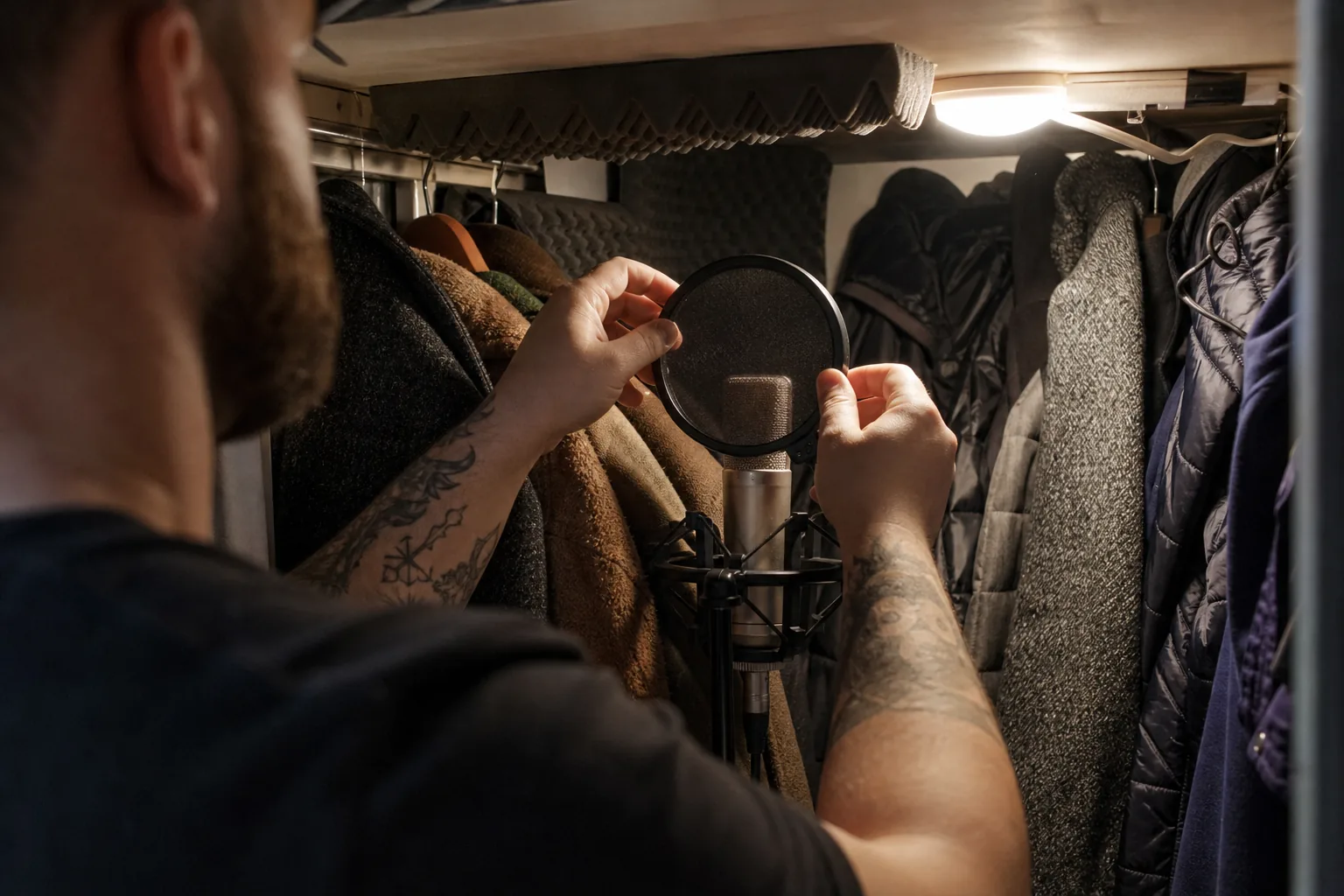
Why podcast hosts lose hours to re-recording
Most podcast editing time does not go into the conversation. It goes into the small things around it. A sponsor name read wrong in the second ad break. A statistic that turned out to be outdated after the guest left. An intro that needs a new date, a new episode number or a new call to action every single week.
Each of those fixes normally means setting up the mic again, finding the same distance and the same energy, recording a few takes and then trying to make the new line sit next to audio you recorded ten days earlier in a different mood. When the host is traveling, the episode waits. When the show belongs to a company, the episode waits for an executive's calendar.
A voice clone moves those repeatable lines from the booth to the script. You fix a sentence by editing text and rendering it again, in your voice, without opening the mic.
What podcasters produce with a voice clone
Use your voice clone for the parts of the show where the words change more often than the delivery.
- Pickup fixes for flubbed lines, wrong numbers and mispronounced names, without re-recording the segment
- Intros and outros written for each episode, with the guest's name and this week's offer
- Sponsor and ad reads you can rewrite per sponsor and per campaign after the episode is cut
- Episode trailers and teasers for social clips and podcast app previews
- Short solo news or update segments between interview episodes
- Show notes or a newsletter read as audio for listeners who prefer to listen
- Translated episodes in Spanish and other languages in your own voice
The honest hybrid works best. Keep live interviews and unscripted conversation human, because that is what listeners subscribed for. Let the clone cover the scripted segments that surround them. If you also want a narrated version of a book or course, the same voice works for AI voice cloning for audiobooks.
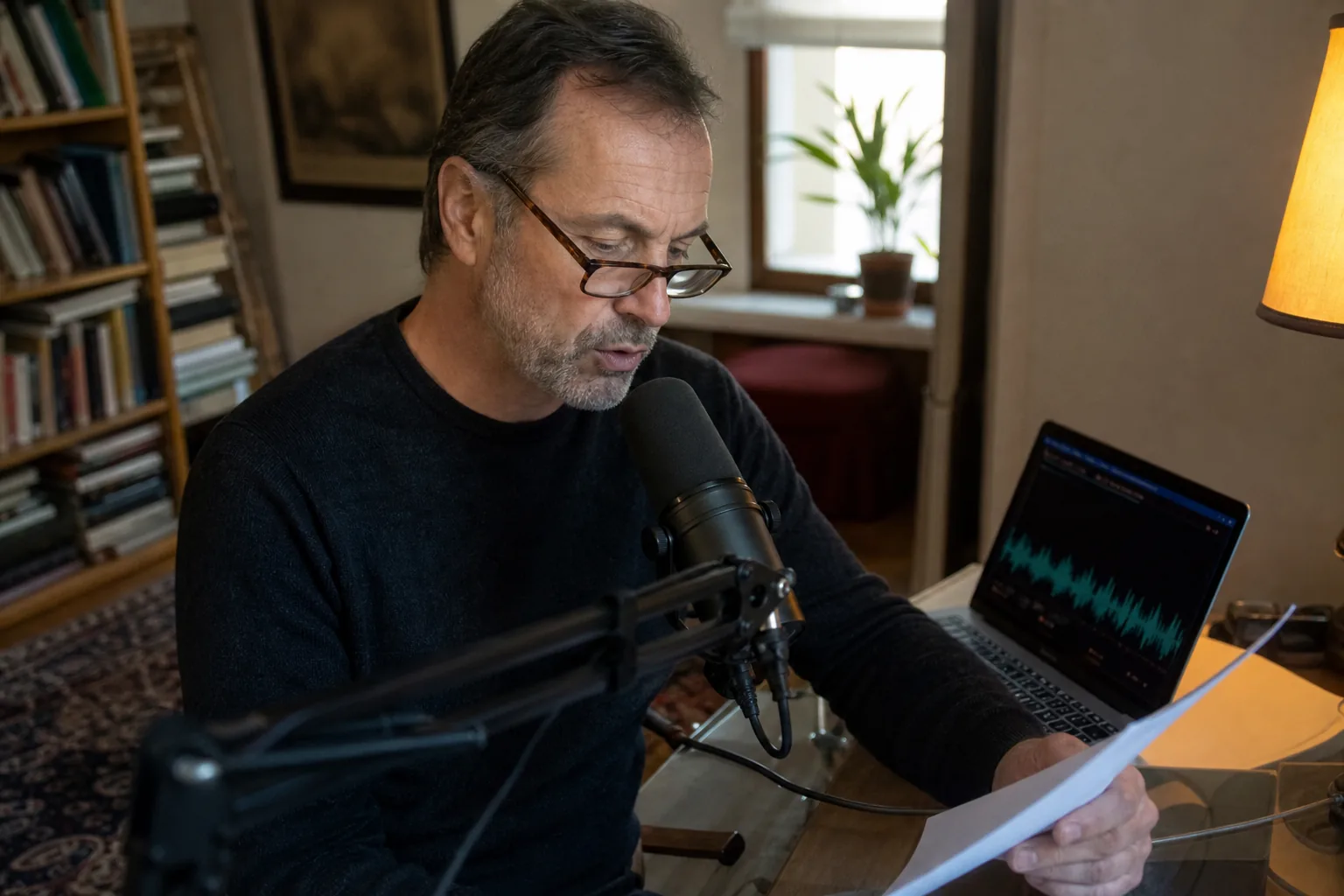
Step 1 record your voice sample with your own consent
Record a 60 second voice sample by reading the on-screen passage in a quiet room, ideally with the same microphone you use for the show. Your clone then matches the sound your listeners already know. The guide to cloning your own voice covers room, mic distance and gain before you record.
You then pass a live check and read a spoken consent phrase that is unique to your session. Nobody can clone you from your published episodes, and you cannot clone a guest or a co-host from their audio. A co-host who wants a clone records their own sample and consent from their own invite. Read how this works on consent and safety.
Step 2 type the script and fix pronunciation
Paste or type the line you need. For a pickup, write the corrected sentence plus a few words before and after it, so the cut has room to breathe. For an ad read, paste the sponsor's approved copy and adjust the wording to sound like you talk.
Podcasts are full of names that a text model has never heard: guests, sponsors, product names, towns. On Pro and above you add them to the pronunciation dictionary once and every future render says them the way you do. That matters most for ad reads, where getting the brand name right is part of what the sponsor pays for.
Step 3 export the audio and drop it into your edit
Export the narration as WAV for editing or MP3 for quick review. Place it on the host track in your editor, match the loudness to the surrounding audio, and add a little of the room tone from your recording under the new line so the join is invisible.
Listen to the full segment once before you publish. A clone reads what you typed, so a typo becomes a spoken typo. If a line sounds rushed, add a comma or split the sentence and render it again. Corrections only use the minutes of the line you render, not the whole episode.
What a podcast season costs in voice minutes
Voice clone minutes count the finished audio you export. A weekly show publishes about four to five episodes a month, so estimate one month of rendered audio and pick the plan that covers it.
| Plan | Price | Voice clone minutes per month | What it covers for a weekly show |
|---|---|---|---|
| Starter | $49 a month, or $24 billed yearly | 40 | Intros, outros, two ad reads and pickups, about 5 minutes an episode |
| Pro | $149 a month, or $74 billed yearly | 120 | A 25 minute solo episode every week, or a weekly show plus a Spanish version of its scripted segments |
| Business | $499 a month, or $249 billed yearly | 300 | An agency or company running two or three solo shows, with 5 clones and 10 seats |
| Enterprise | $1,499 a month, or $749 billed yearly | 700 | Several shows and full translated editions, with SSO and audit log export |
Each translated version counts its own length, so a 20 minute episode in English and Spanish uses 40 minutes. Rendering a line twice counts twice. Compare every allowance on plans and pricing.
Podcast translation in your own voice
A translated feed is the fastest way for a US show to reach Spanish speaking listeners without hiring a second host. Starter covers 10 languages and Pro and above cover 30+, all in your own voice. Write or paste the translated script, have a fluent speaker review it, and render it as a separate episode.
If your show is also published as video on YouTube, the AI video dubbing workflow translates the video with lip sync, and the AI avatar for YouTube videos page covers video segments you never filmed.
Disclosure and listener trust
Listeners forgive a lot, but they do not like finding out later that a voice they trusted was synthetic. Say it plainly. A line in the show notes, or a short spoken note before an AI voiced segment, keeps the relationship honest. Every IdClone export carries an AI label and content credentials, and your consent record is stored with your clone.
For ad reads, tell the sponsor how the read is produced before the campaign runs. Many advertisers are fine with it, some contracts require a live host read, and it is cheaper to ask first. The rules for using a cloned voice are covered in is voice cloning legal.
Who it fits and who should stay live
A voice clone pays off for shows with a lot of scripted audio: solo shows, company podcasts, news briefings, course podcasts and any show with weekly sponsor reads. It also pays off for production agencies that edit several shows and lose days waiting for hosts to record pickups.
It is a weaker fit for improvised conversation, comedy that depends on timing, and personal storytelling where the emotion of the moment is the point. Keep those segments live. If you are still comparing tools for voice only work, voice cloning software for business lists what to check, and voice cloning explains how IdClone builds and protects your clone.
Questions and answers
Can I use AI voice cloning for my podcast?
Yes. You can clone your own voice and use it for intros, outros, ad reads, pickup fixes and solo segments. IdClone builds the clone from a 60 second sample after a live check and spoken consent, and exports the audio as WAV or MP3 to drop into your usual podcast editor.
How much audio do I need to clone my voice for a podcast?
IdClone needs a 60 second voice sample read from an on-screen passage. Record it in a quiet room with the microphone you use for the show, so the clone matches your episodes. You do not upload old episodes, and nobody can build a clone of you from published audio.
Can I clone my co-host's voice?
Only if your co-host clones it themselves. IdClone builds a clone only from the person who passes the live check and speaks the consent phrase. Invite your co-host to the workspace, they record their own sample and consent, and you can both use your clones on Pro and above.
Is it legal to use a voice clone on a podcast?
Using a clone of your own voice is legal in the US. Cloning someone else's voice without permission can violate state right of publicity laws and platform rules. Keep your consent record, tell sponsors how reads are produced, and disclose AI voiced segments to listeners in the episode or show notes.
Will listeners know it is an AI voice?
Most listeners will not notice a short pickup or ad read that is well edited. That is exactly why you should tell them. A short note in the show notes or before an AI segment keeps trust, and each IdClone export carries an AI label and content credentials.
Can a voice clone translate my podcast into Spanish?
Yes. Your clone speaks Spanish and other languages in your own voice. Starter covers 10 languages and Pro and above cover 30+. Paste the translated script, have a fluent speaker review it, and render it as a separate episode. Each language version uses its own voice minutes.
How much does AI voice cloning for podcasts cost?
IdClone starts at $49 a month, or $24 a month billed yearly, with 40 voice clone minutes. That covers intros, ad reads and pickups for a weekly show. Pro at $149 a month includes 120 minutes, enough for a weekly 25 minute solo episode, plus the pronunciation dictionary.
Put your next ad read in your own voice
Paste an intro or a sponsor read and preview how many minutes it uses. Choose the plan that fits your release schedule, then record your verified voice sample and render your first segment.