AI voice cloning for audiobooks narrated in your own voice
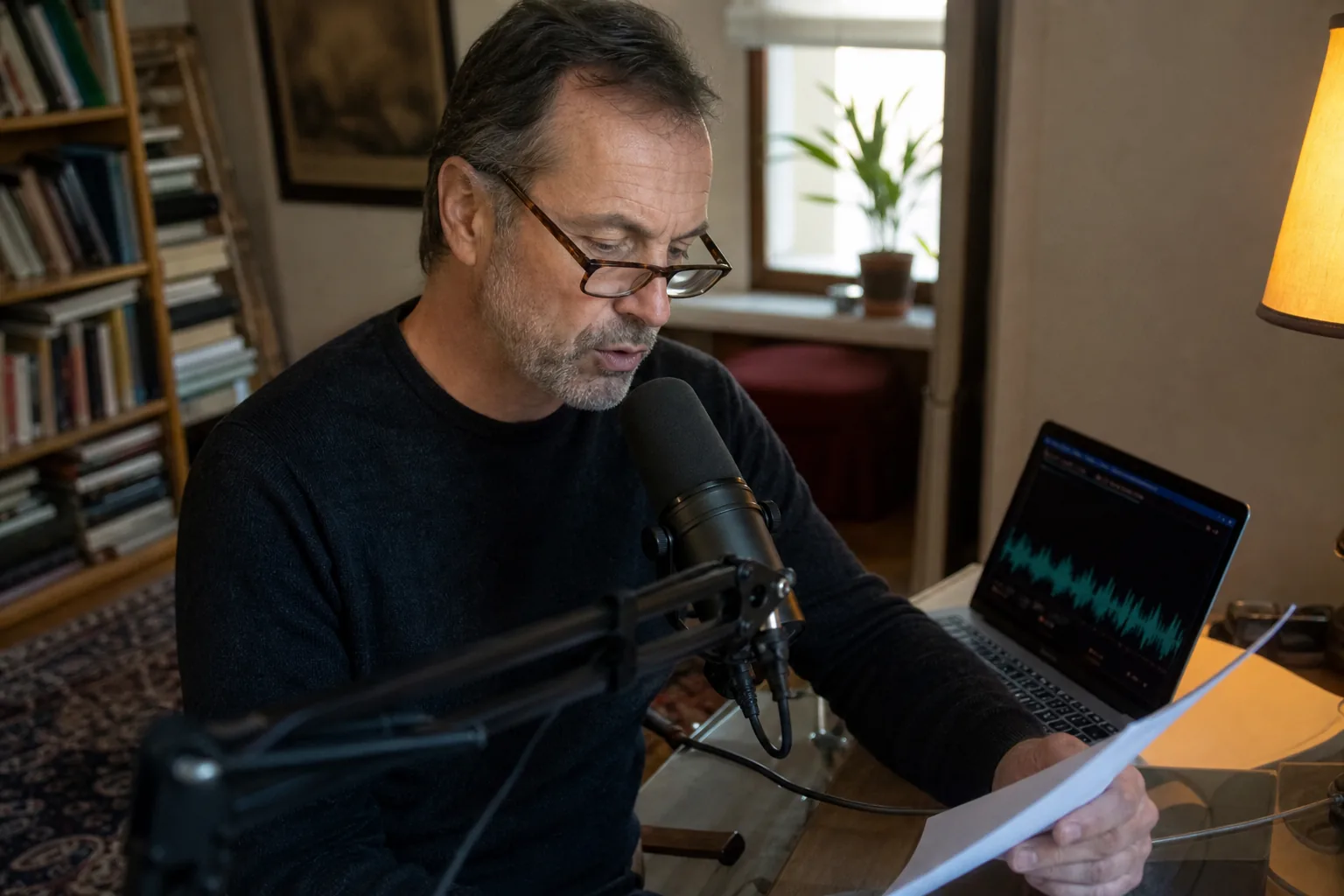
AI voice cloning for audiobooks lets an author narrate a whole book in their own voice without weeks in a studio. You record a 60 second sample once, confirm it is your voice, and then turn each chapter into WAV or MP3 narration from the manuscript text. With IdClone a typical 60,000 word nonfiction book, roughly six and a half hours of audio, fits into two months of the Business plan or a single month of Enterprise.
Who should narrate with a voice clone
The authors who gain the most are the ones whose voice is part of the product. A business author whose readers already know them from a podcast, a coach whose clients hear them on calls every week, a consultant who sells a framework and wants the audiobook to sound like the keynote. For those writers, a hired narrator is a stranger reading their ideas, and the alternative of narrating it yourself means booking a booth, reading for days and paying an engineer to cut out every stumble.
A voice clone sits between the two. The narration is your timbre, your accent and your pace, and the production work moves from the recording booth to the manuscript. You fix a sentence by editing the text and rendering the paragraph again, not by going back into the booth and trying to match how you sounded three weeks earlier.
It is a weaker fit for fiction with many characters who need distinct acted voices, and for memoirs where the emotional delivery of a live reading is the whole point. Be honest with yourself about which kind of book you have before you buy anything.
What an audiobook costs with a voice clone
Audiobook length follows word count. Narration usually runs at about 150 to 160 words a minute, so a 60,000 word book lands near 380 to 400 minutes of finished audio, and a 90,000 word book near 600. That number is what you budget against.
| Plan | Price | Voice clone minutes per month | A 60,000 word book (about 390 minutes) |
|---|---|---|---|
| Starter | $49 a month, or $24 billed yearly | 40 | Fine for a sample chapter and a retail preview, not the full book |
| Pro | $149 a month, or $74 billed yearly | 120 | About four months of chapters |
| Business | $499 a month, or $249 billed yearly | 300 | About two months |
| Enterprise | $1,499 a month, or $749 billed yearly | 700 | One month, with room for corrections |
Minutes reset every billing period and count only finished audio, so a paragraph you render twice counts twice. For comparison, professional narrators commonly quote per finished hour, often in the range of a few hundred dollars per finished hour before studio and editing, which puts a six and a half hour book well above a thousand dollars. The clone wins on cost when you plan to publish more than one book, update editions, or release the audiobook in a second language. The full plan table is on IdClone pricing.
How to produce an audiobook with your cloned voice
- Record the voice sample. Read the on-screen passage for 60 seconds in a quiet, soft room at the pace you want the book to have. You then pass a live selfie check and speak a one time consent phrase, so the clone can only ever be built from your own voice.
- Prepare the manuscript. Strip page numbers, footnote markers and figure captions that should not be read aloud. Spell out abbreviations the way you say them.
- Add your terms to the pronunciation dictionary (Pro and above). Character names, product names and the jargon of your field get read the same way in chapter 1 and chapter 20.
- Render one chapter at a time and listen to all of it. Fix anything odd by editing the text and rendering only that paragraph again.
- Export WAV for the master, then do the final mastering in your audio editor to the technical specification of the retailer you publish with.
Our step by step guide to cloning your own voice covers the sample recording in more detail: room, microphone distance and the mistakes that make a clone sound flat.
What to check before you buy a voice clone for a book
Most voice cloning tools were built for short ad reads and video narration, not for six hours of continuous listening. Before you commit a manuscript, test these points on a real chapter.
- Long listening fatigue. Ten seconds always sounds good. Listen to twenty minutes in one sitting and notice whether the rhythm becomes monotonous.
- Consistency across sessions. Render chapter 3 today and chapter 12 next week, then play them back to back.
- Pronunciation control. You need a way to fix names once rather than rewriting them phonetically in every chapter.
- Whose voice can be cloned. A tool that lets anyone upload any audio is a tool someone can use to publish a book in your voice. IdClone builds a clone only after the person in the sample passes a live check and speaks the consent phrase.
- Usage limits. Count finished minutes against your word count before you pay, not after.
The broader comparison of products in this category is in our voice cloning software buyer guide.
Retailer rules and disclosure for AI narrated audiobooks
Audiobook retailers and distributors set their own rules for synthetic narration, and those rules have changed more than once in the last two years. Some accept AI narrated titles, some only through their own programs, and some require you to label the title as AI narrated. Check the current policy of every store you plan to sell in before you produce the full book, not after.
Whatever the store requires, say it on the product page anyway: narrated by the author using a verified AI clone of their voice. Listeners care less about how it was made than about feeling misled, and an honest line in the description avoids refund requests and one star reviews about the narration. Every IdClone audio export can carry content credentials metadata. For the legal side of using a cloned voice commercially in the US, read is voice cloning legal.
Use the same voice to sell the book
Once the clone exists, the audiobook is only the first thing it narrates. The same voice reads chapter excerpts for podcast guest spots, short promo clips for retail pages and email, and the welcome lessons of a course built on the book. If you want to go further, the same account renders video of you reading an excerpt, with lip sync, from the two minute video clone. Authors with a course behind the book use the AI clone for coaches and course creators workflow for exactly that.
Excerpts also feed the rest of your launch. You can repurpose a chapter into posts for every social channel and pair each post with a 30 second audio clip in your voice, so the launch sounds like you everywhere it appears.
Which plan fits an author
Start on Starter if you want to hear a full sample chapter in your own voice before you commit; 40 minutes is enough for one long chapter and a retail sample. Choose Pro if you narrate one book over a few months and need the pronunciation dictionary and 30+ languages for a translated edition. Pick Business or Enterprise if you want the full book in one or two billing periods, or you are a small publisher producing books for several authors, each recording their own consent. The voice cloning page shows exactly how the sample and consent check work.
Questions and answers
Can I use AI to narrate my own audiobook?
Yes. You record a 60 second voice sample, pass a live check and speak a consent phrase, then IdClone narrates your manuscript in your own voice, chapter by chapter, exported as WAV or MP3. Check each retailer's current policy on AI narration before you publish the finished book.
How much does it cost to make an audiobook with AI voice cloning?
It depends on length. A 60,000 word book is about 390 minutes of audio. On IdClone that is about two months of Business at $499 a month, or one month of Enterprise at $1,499, with smaller books fitting Pro at $149 a month over several months.
How long does it take to narrate a book with a voice clone?
Rendering is fast, so the time goes into preparing the manuscript and listening back. Plan on roughly the length of the book in listening time plus fixes, so a six and a half hour book takes a few working days rather than weeks of studio sessions.
Is a cloned voice good enough for a full audiobook?
For nonfiction read in a steady voice, usually yes, if you test a full chapter first and fix names with the pronunciation dictionary. For fiction with many acted character voices, a professional narrator is still the better choice.
Can I clone someone else's voice to narrate my book?
No. IdClone only builds a clone from the voice of the person who passes the live check and speaks the consent phrase. If a co-author or a hired narrator agrees to be cloned, they record their own sample and consent from their own invite.
Can my audiobook be translated into other languages in my voice?
Yes. Pro and above cover 30+ languages and Starter covers 10, in your own voice. Have a fluent reader review the translated manuscript before rendering, and remember each language edition uses its own minutes.